

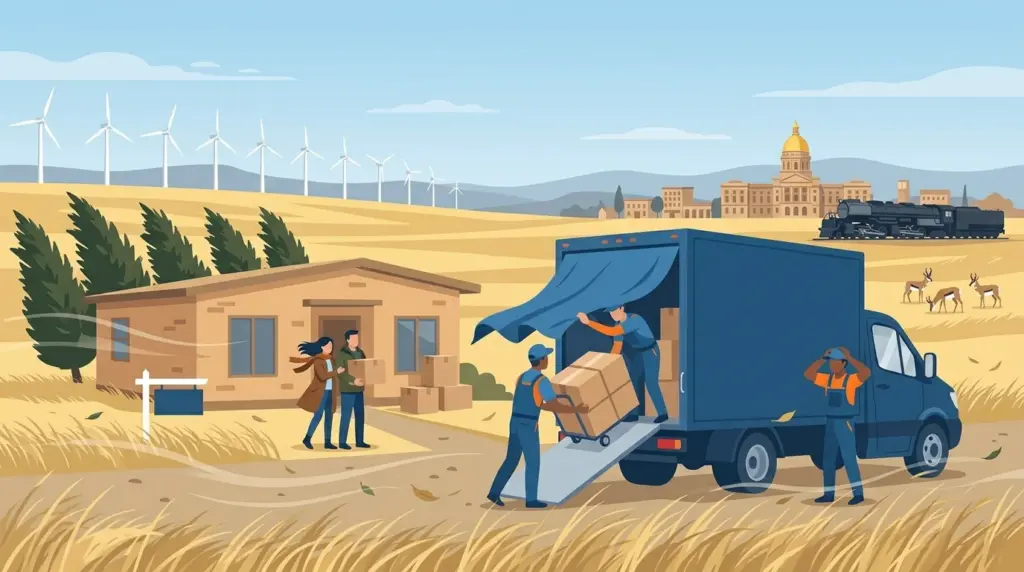
Start with the Cheyenne life you want to build
Cheyenne can offer a manageable state-capital routine, regional access along I-25 and I-80, and housing that ranges from historic central neighborhoods to newer growth corridors. The city’s short average travel times are a practical strength, yet high-plains wind, snow, sun exposure, and the property’s exact edge-of-city location influence both comfort and moving logistics.
Downtown and the Avenues create a central pattern; north and east growth areas serve different retail and employment corridors; south Cheyenne and county-pocket edges can change utilities, roads, and municipal services. Select the home by testing the full address, not simply the Cheyenne mailing name.
The Wyoming state guide covers statewide prices, utilities, taxes, and registration. This Cheyenne guide focuses on housing, neighborhood form, transportation, weather, and the physical move.
Turn Cheyenne housing data into a usable budget
Zillow estimated typical advertised monthly rent in Cheyenne at about $1,471 in April 2026. The Cheyenne estimate combines advertised apartments and houses of several sizes, so use it as an opening budget rather than a one-bedroom or two-bedroom price.
Cheyenne housing should be priced with exposure and operating cost included. Renters should confirm heat, electricity, parking, snow duties, outdoor storage, and whether utilities or services change at the city edge. Buyers should inspect roof, siding, windows, insulation, heating, drainage, fences, trees, driveway, and garage. A well-protected home can be worth more than a lower listing price with repeated weather work.
Choose an area by testing the ordinary week
PlanCheyenne and the city’s development maps help identify growth and land-use patterns. Compare a central home with north, east, or south options through the same work, weather, utility, and truck-access test.
Build transportation around the exact address
Cheyenne Transit Program operates accessible fixed-route and paratransit service, and its current map should be tested against the exact home and schedule. Many households will still rely primarily on a car. A short mean commute is useful only when the route, weather, and household timetable align.
I-25 and I-80 make regional travel convenient and expose the household to changing road conditions. Check weather and road information for longer trips and build a local alternative for essential needs. A home near work and groceries can preserve Cheyenne’s compact advantage during high wind or snow.
Price the move around Cheyenne access
Wind changes how a Cheyenne move is staged. Secure doors, ramps, pads, cartons, and outdoor belongings; keep lightweight packing material contained; and position the truck with safe clearance. Measure driveway, alley, gate, branches, stairs, and overhead lines before the provider chooses equipment.
Winter moves begin with active heat and a cleared, treated route. Downtown guidance assigns snow responsibilities to adjacent property owners and changes how some on-street areas are cleared. Confirm the property’s obligations, parking alternative, and delivery path. Use a written alternate date when forecast conditions make the original plan unsafe.
Turn arrival into a good first Cheyenne week
Carry warm layers, wind protection, medication, documents, food, water, bedding, chargers, lighting, and basic vehicle or snow tools. Confirm heat, hot water, internet, alarms, garage operation, and exterior gates before the first night.
During the first week, learn the transit option, grocery and medical routes, snow responsibility, road-condition source, refuse service, and the safest I-25 or I-80 alternative. Secure outdoor furniture, grills, bins, and play equipment for the site. That preparation lets Cheyenne’s compact distances remain a year-round advantage. The move is complete when the home works confidently in ordinary high-plains weather.
Questions that sharpen the Cheyenne decision
Sources
- U.S. Census Bureau: 2020-2024 American Community Survey 5-Year Data
- City of Cheyenne: Planning and Development
- City of Cheyenne: Downtown Sidewalk Snow Management
- City of Cheyenne: Fixed Route Transit Service
- FMCSA: Moving Checklist
- FMCSA: How to Understand and Compare Moving Estimates
- Zillow Research: Housing Data and ZORI methodology