

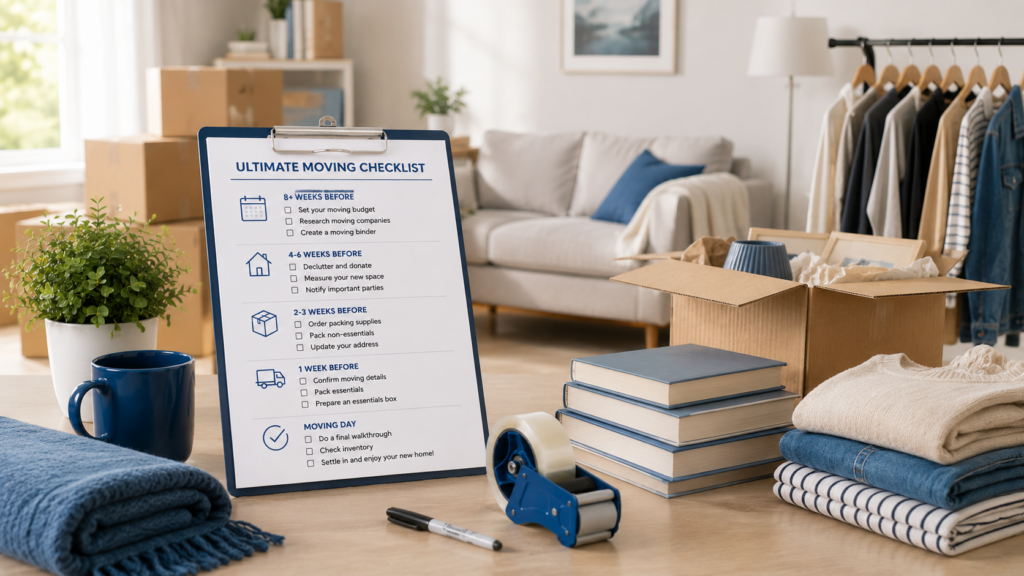
A master checklist should make the move easier to control, not harder to read. The most useful structure is not a hundred unrelated boxes. It is a chain of dependencies: facts enable decisions, decisions enable bookings, bookings shape packing, and packing shapes moving day.
Give every task an owner, due date, and completion signal. “Call mover” is vague. “Alex compares three written scopes and saves the selected contract by Friday” can be managed.
Phase 1: define the move before buying anything
Confirm origin and destination dates, access rules, inventory, decision-makers, budget limits, travel, pets, children, work obligations, and special items. Select DIY, professional, or hybrid service with the service-model framework.
- Create one shared calendar, task list, and document folder.
- Record building access, elevator, parking, gate, and loading requirements.
- Identify items needing special handling, disposal, or separate transport.
- Choose the person authorized to approve scope and cost changes.
Phase 2: secure the critical path
Obtain written scopes or reserve equipment, confirm access appointments, set travel arrangements, and establish a contingency plan. If hiring help, first apply the trust verification process, then compare qualified companies with the fit scorecard.
Phase 3: reduce and inventory the shipment
Decide what will move before buying supplies or finalizing estimates. Donate, sell, recycle, dispose, or transfer items with explicit deadlines. Photograph high-value and fragile items, and create an exception list for goods that cannot enter the ordinary shipment.
Phase 4: pack in dependency order
Start with low-use belongings and preserve the systems that keep the household functioning. Use Moveline’s packing workflow for zones, labels, weight control, and room closeout. Maintain separate travel, first-night, document, and specialty-item lanes.
Phase 5: transfer the household
Schedule utilities and connectivity, update addresses, move records and prescriptions, confirm schools or care arrangements, and document key handoffs. Moveline’s guide to collecting documents before a move can seed the records and notification list.
Phase 6: close the old home
Finish cleaning, remove prohibited or leftover items, photograph condition, record meter readings when appropriate, return keys, and complete the final sweep. Keep contracts, inventory, receipts, identification, medication, and valuables with the household.
Phase 7: control moving and delivery day
Confirm the crew or helpers, walk through the scope, protect floors and doors, supervise inventory, keep contact information accessible, and record changes in writing. At delivery, direct boxes by their labels, note missing or damaged items before losing the opportunity to document them, and keep essential zones clear.
Phase 8: open the new home in operating order
First establish safety, bathroom, sleep, medication, food, pet care, and work connectivity. Then unpack by dependency instead of room appearance. Use Moveline’s unpacking tips to keep empty cartons and unfinished decisions from spreading through the home.
Use evidence-based completion
A task is complete when its result can be shown: a reservation number, saved document, photo, paid receipt, confirmed appointment, labeled container, or transferred key. This closes the loop and prevents two people from assuming the other handled it.