

Why Wyoming requires both a place and a distance decision
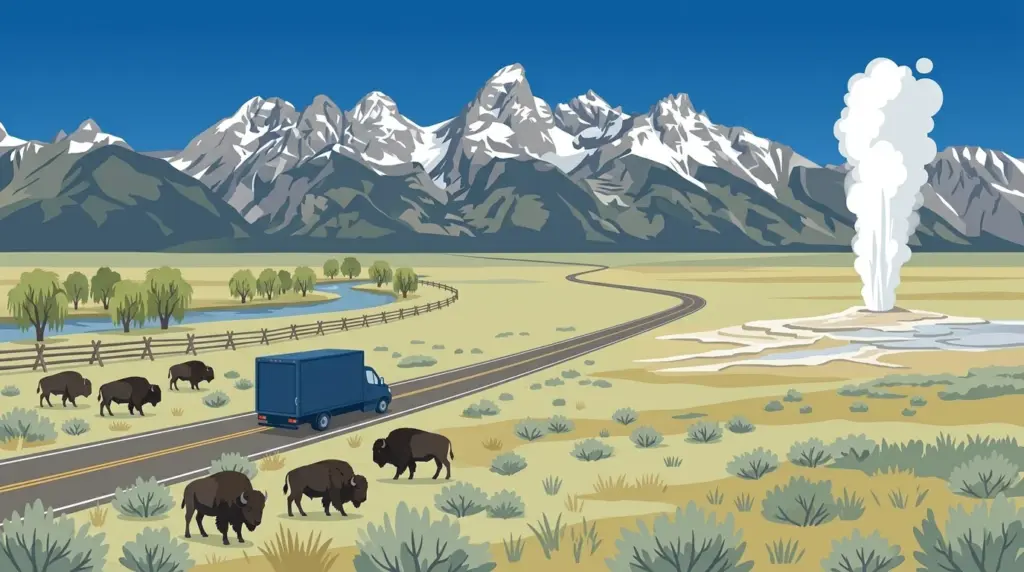
Wyoming can appeal to movers who want smaller cities, open distance, or a mountain setting. Cheyenne and Casper are the main city references in this guide, while western resort and mountain communities bring different housing supply, terrain, and service access. The place may be the reason to move, but distance is part of living there.
Wyoming’s broad 2024 price level was 7.3% below the U.S. average, yet the statewide median home sale price was $464,500 in May 2026. That contrast matters: everyday costs may be lower while housing in the desired market is not. Residential electricity rates were below the national rate, but heating, insurance, vehicles, and long trips to services still belong in the monthly budget.
Compare Cheyenne and Casper using current homes and the places you need to reach regularly. For a western or rural destination, price winter access, road conditions, fuel, service distance, and mover coverage separately. Wyoming offers space and choice, but only the exact community shows what they cost.
Related destination guides: Moving Guides by State · Moving Guides by City.
Where should you live in Wyoming?
Wyoming’s few city centers are separated by long distances, while ranch, energy, mountain, and resort communities have distinct housing and service conditions. Cheyenne and Casper are practical urban anchors; western gateway towns and rural properties need separate affordability and access checks.
The historical rent range runs from $1,009 in Casper to $1,118 in Cheyenne, a $109 monthly spread. That is a useful screening difference, but the same-size current listing and complete monthly budget should decide whether the saving is real.
Smaller communities and rural Wyoming: Ranch and energy towns, reservation communities, Bighorn Basin, and western mountain and resort areas can be hours apart. Confirm broadband and cell service, health care, heating and backup power, well and septic systems, water and livestock needs, wildfire and winter access, wind exposure, private-road maintenance, truck turning space, and whether a mover serves the route.
Build the complete cost and timing plan
Use Moving Cost by State in 2026 for the national comparison frame and Average Moving Cost in the U.S. 2026 for service-level context. A usable Wyoming budget keeps transportation, packing, access, valuation, storage, customer travel, housing overlap, deposits, utilities, vehicle work, and arrival cash visible as separate lines.
Tax Foundation’s 2025 combined state-and-average-local sales-tax comparison is 5.441%. It is a general benchmark, not the tax treatment of a specific purchase, service, municipality, or household. Electricity averaged 13.59 cents per kWh in March 2026; an actual bill still depends on the dwelling, provider, climate, and usage.
High winds, blizzards, drifting snow, ice, wildfire smoke, heat, and rapid mountain weather changes can interrupt exposed travel. Seasonality changes capacity and exposure rather than applying one universal markup. Use Best Time to Move in 2026 to compare feasible windows, then request the same inventory, access, services, and protection across those dates.
FMCSA data listed 140 household-goods carriers associated with Wyoming as of 2026-06-01. That count is not a recommendation and does not prove that a carrier serves a particular route. Verify the specific company, authority, estimate, order, valuation choice, payment terms, and delivery obligations before booking.
Prepare the address and arrival sequence
Confirm road restrictions, wind thresholds, alternate staging, winter equipment, and whether the carrier serves the exact destination. Do not release the origin home merely because the truck has departed. Keep identification, medicines, records, keys, chargers, weather gear, and first-night supplies outside the shipment, and retain enough housing and cash flexibility for the written delivery window.
Use How to Choose a Moving Company to verify the provider and Ultimate Moving Checklist to coordinate housing, transportation, travel, utilities, records, and deadlines. Time-sensitive state requirements should be checked with the responsible agency for the household’s actual trigger and circumstances.
Make the Wyoming decision from one reconciled plan
Bring the chosen address, rejected alternatives, inventory, access record, date windows, quote assumptions, customer travel, delivery range, arrival cash, utility confirmations, and responsible contacts into one plan. A decision is ready when every major cost belongs to a named source and every timing dependency has an owner and fallback.
The state figures on this page are screening evidence. Replace them with current listings, official requirements, address-level insurance and utilities, and written provider terms before committing money. If the address, inventory, date, or access changes, refresh the dependent comparison instead of treating the earlier total as fixed.
Sources
- U.S. Bureau of Economic Analysis Regional Price Parities
- U.S. Bureau of Economic Analysis State Personal Income
- U.S. Census Bureau 2020–2024 American Community Survey 5-Year Data
- U.S. Census Bureau Vintage 2025 City and Town Population Estimates
- U.S. Census Bureau State Population Estimates
- U.S. Energy Information Administration State Energy Data
- Tax Foundation State and Local Sales Tax Rates, 2025
- FMCSA Household Goods Motor Carriers dataset
- FMCSA: Estimating Charges
- FMCSA: Plan Your Move
- NOAA Billion-Dollar Weather and Climate Disasters
- Redfin Data Center
- USA.gov State Motor Vehicle Services Directory
- U.S. Census Bureau: Gross rent definition
- U.S. Census Bureau: Median real estate taxes
- NCES College Navigator
- National Park Service: Wyoming
- Travel Wyoming