

Before signing a lease, calculate two numbers: the cash you need before getting the keys and the amount you will pay every month. The first can include deposits, fees, rent, utilities, parking, pets, and the move. The second shows whether the apartment remains affordable after the move-in specials end.
Your cash-before-keys calculator
Add every amount due from application through move-in day:
- Application and screening charges for each adult applicant
- Holding deposit or reservation payment
- Security deposit
- Move-in or administration fee
- First month’s rent and any lawful advance rent
- Pet deposit or fee and the first pet-rent payment
- Parking deposit, permit, or first monthly charge
- Utility deposits, activation, and internet installation
- Renter’s insurance premium if required
- Moving company, truck, packing supplies, elevator, and parking
For each line, record the exact amount, due date, recipient, payment method, and whether it is refundable. Do not subtract a promised concession until the lease says exactly when and how it is applied.
Separate deposits, one-time fees, and monthly charges
| Type | Examples | How to treat it |
|---|---|---|
| Potentially refundable | Security or pet deposit, key deposit | Cash needed now; read the return conditions and local law |
| Nonrefundable one-time | Application, administration, move-in, setup | A real cost of choosing the apartment |
| Recurring | Rent, pet rent, parking, utilities, trash, internet | Add to the normal monthly total |
| Conditional | Late fee, lockout, replacement key, lease-break charge | Understand before signing, but do not count as routine cost |
A refundable deposit is not the same as a fee, but it still ties up cash. Security-deposit limits, fee rules, disclosure requirements, and return deadlines vary by state and city. Check the lease and the current law where the property is located.
Calculate the true monthly price
Start with base rent. Add required parking, pet rent, trash, technology packages, amenity charges, and a realistic utility estimate. If the lease offers a free month, divide the total rent actually due over the full lease term to understand the average, but keep enough cash for the full monthly amount after the concession ends.
For a simple first-year comparison, add the nonrefundable upfront charges to 12 months of recurring housing charges, then add the moving price. Keep refundable deposits in a separate “cash tied up” line. This makes two apartments with different promotions and fee structures easier to compare.
Read the move-in rules before booking a mover
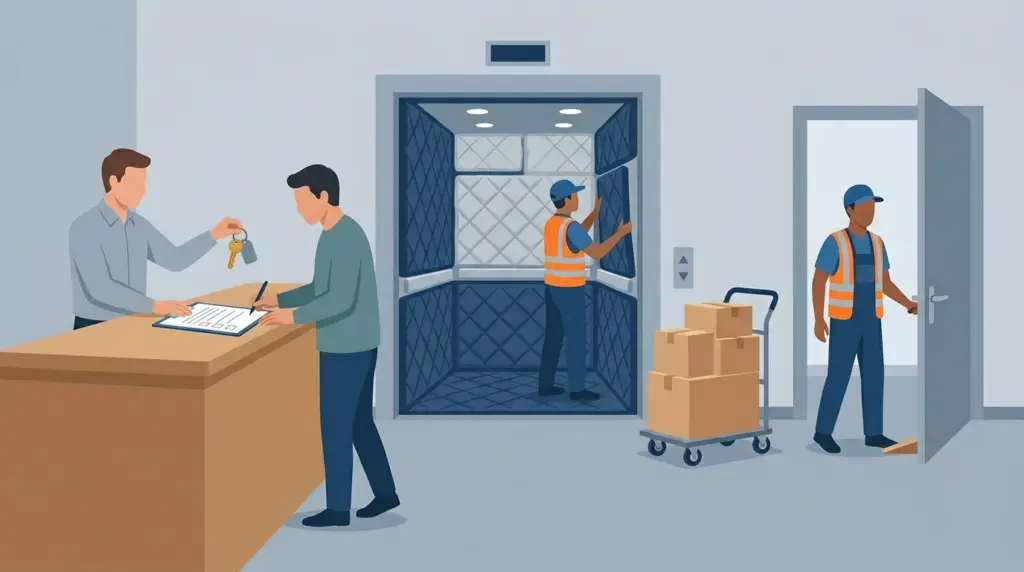
Many apartment buildings require an elevator reservation, loading time, proof of mover insurance, floor protection, or a move-in deposit. Ask the leasing office for the written rules and available dates before choosing the moving date. Confirm truck height, loading-zone access, parking permits, stairs, long hallways, and after-hours restrictions.
Give the rules to every mover before requesting a final price. Waiting for an elevator, carrying from distant parking, and city parking tickets can all change the bill when they were not included.
Verify every payment
Confirm the property owner or management company, the person authorized to lease the unit, and the exact payment instructions. Tour the apartment in person or by live video, read the lease, and obtain a receipt. Do not send money because someone creates artificial urgency or refuses to show the home.
The Federal Trade Commission warns that scammers copy real listings, change contact details, and ask for application fees, deposits, or rent. Review the FTC’s rental-listing scam guidance before paying a person or company you have not independently verified.
Inspect the apartment before moving boxes in
- Complete the move-in condition form within the required time.
- Take dated photos and video of every room, appliance, floor, wall, window, fixture, and existing mark.
- Test locks, smoke and carbon-monoxide alarms, water, outlets, heating or cooling, and included appliances.
- Send repair requests in writing and keep proof of delivery.
- Save the lease, fee schedule, receipts, inspection, photos, and correspondence together.
This record makes the first week easier and can protect the security deposit when the lease ends.
Questions to ask before applying
- What is the complete amount due before keys, by date and payment type?
- Which payments are refundable, and under what conditions?
- What charges repeat monthly in addition to rent?
- Which utilities are included, allocated, or billed separately?
- How do promotions affect each month’s actual payment?
- What move-in reservations, insurance documents, deposits, or parking rules apply?
- Where can I read the current fee and security-deposit rules for this city and state?
Use Moveline’s apartment moving budget for the rest of the move, and estimate the household portion with the moving cost calculator.