

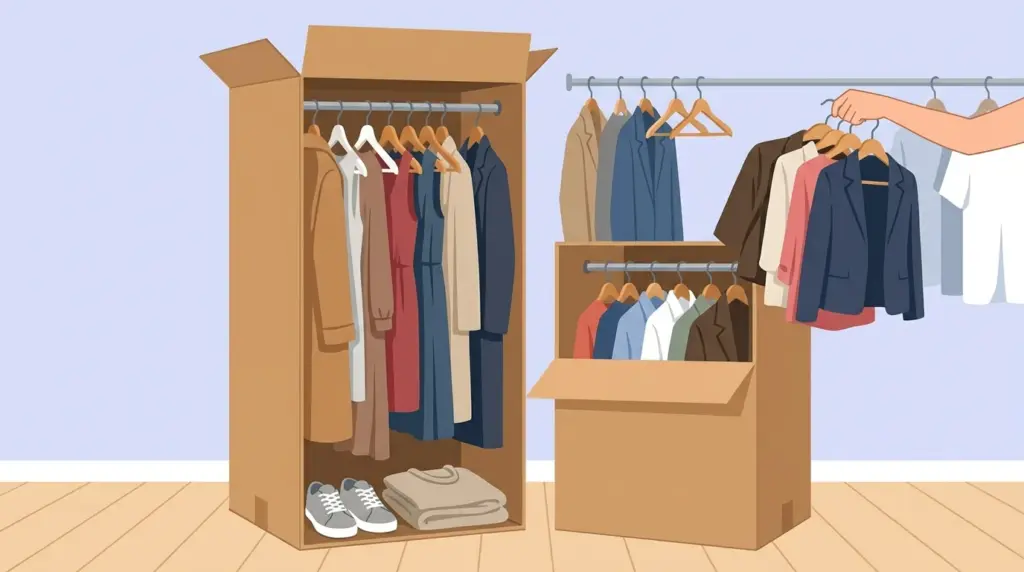
For a first estimate, plan one wardrobe box for about two feet of normally packed closet rail. Then adjust for the actual box, bulky coats, wide hangers, and long garments. Measure before buying: wardrobe boxes differ in height, bar length, strength, and price.
Choose height by your longest garment
| Box type | Best for | Check before buying |
|---|---|---|
| Short wardrobe | Shirts, folded trousers on hangers, jackets, children’s clothing | Garments hang freely without touching the bottom |
| Standard wardrobe | Suits, blouses, skirts, most dresses, mixed closets | Usable bar length and maximum loaded weight |
| Tall wardrobe | Long dresses, coats, robes, formalwear | Box fits doors, vehicle height, and storage area |
| Lay-flat clothing box | Delicate garments that should not hang during transport | Acid-free tissue or specialist packing for valuable textiles |
Measure from the top of the hanger to the lowest point of the garment. Add enough room so fabric does not bunch on the bottom. Use the product’s inside dimensions, not only its outside height.
Calculate how many boxes you need
- Measure the rail space occupied by clothing in inches.
- Record the usable hanging-bar length of the exact box.
- Divide occupied rail inches by usable bar inches.
- Round up to a whole box.
- Add one box or about 10% for bulky groups and last-minute clothing.
Example: 9 feet of hanging clothes equals 108 inches. A box with a 24-inch usable bar gives 108 ÷ 24 = 4.5, so start with 5 boxes. Add one more if the closet includes heavy coats, padded hangers, or clothing you want separated.
Adjust for garment thickness
Two feet of tightly packed shirts and two feet of winter coats will not use the same box space. Keep bulky coats, structured suits, formalwear, and wide wooden hangers in their own count. Do not compress clothing until the bar bows or the box sides spread.
Declutter before measuring. Set aside clothing to donate, clean, repair, carry personally, or store separately. The box count should represent what is actually moving.
Assemble the box in the right order
- Tape the bottom seams according to the box instructions.
- If using the lower space, add light, clean items before installing or filling the bar.
- Set the metal or reinforced hanging bar securely into its slots.
- Transfer garments directly from closet to box in manageable groups.
- Close hanger hooks or bar retainers as the product directs.
- Fold and secure the top without crushing shoulders or collars.
Use the bottom space carefully
The floor can hold pillows, lightweight shoes in clean bags, folded linens, or soft accessories when the box maker permits it. Keep items low enough that they do not press into hanging clothes. Avoid books, weights, liquids, sharp objects, loose hangers, or anything that makes the box unstable.
The box’s published load rating is an upper limit, not a packing target. Stop when one person cannot lift and control it comfortably or when the bottom, bar, or side walls begin to flex.
Protect valuable clothing
Clean and dry garments before packing. Use breathable garment covers or clean tissue appropriate to the fabric. Avoid direct contact with newspaper, colored tissue, adhesive, or plastic that can trap moisture during long storage. Pack jewelry, watches, important documents, and irreplaceable accessories separately under personal control.
Moveline’s designer clothing and shoe guide covers formalwear, valuable garments, shoes, and condition photos.
Label and load upright
Mark the destination room, owner’s name, box number, and “This Side Up.” List general contents without advertising high value. Wardrobe cartons are tall and can tip, so keep them upright against a stable surface and secure the row. Do not place them beneath heavy boxes.
Unpack early and reuse
Move each box to the correct closet, then transfer garments directly to the rail. Inspect for dampness or crushing and let clothing air if needed. Wardrobe boxes in good condition can be reused for coats, curtains, seasonal clothing, sports gear, or a later move.
Final wardrobe-box count
- Short, standard, and tall garments counted separately
- Occupied closet rail measured
- Exact box bar length and load rating checked
- Bulky clothing allowance added
- Light bottom contents planned
- Upright truck space reserved
Add the remaining cartons, tape, labels, and protective materials with Moveline’s moving-supplies checklist and room-by-room packing guide.