

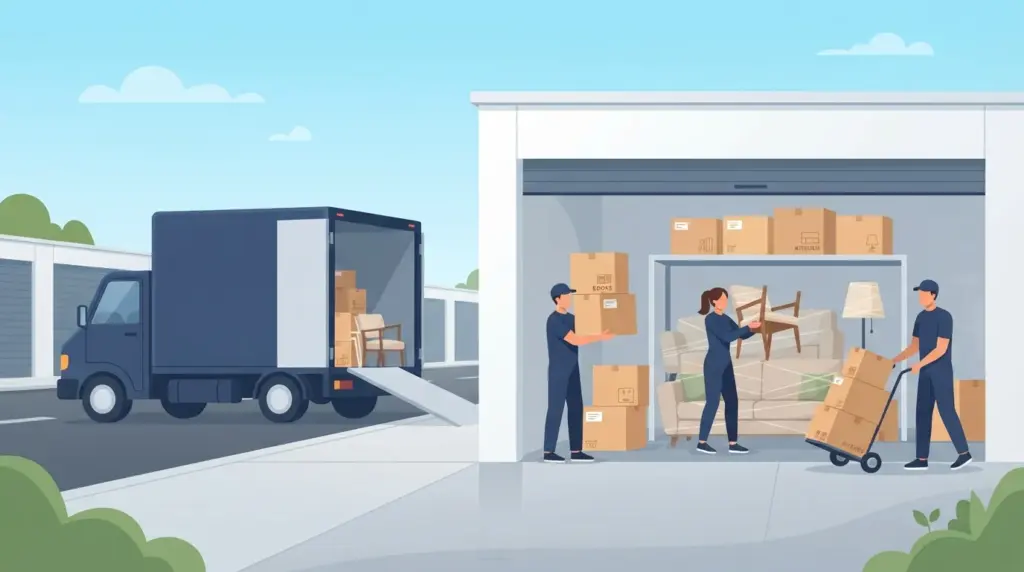
What actually fits in each size
Here is the rough guide people are looking for, and then the caveat that matters.
A 5×5 is about the size of a large closet: boxes, seasonal things, a few small pieces. A 5×10 takes a studio or one-bedroom — a mattress set, a loveseat, a dresser, a TV, a bike, and boxes. A 10×10 holds roughly two bedrooms of furniture, or a one to two-bedroom apartment. A 10×15 handles two to three bedrooms including bulky things like a fridge or a dining set. A 10×20 is garage-sized and takes a two to three-bedroom house, or a car where the facility permits it.
Now the caveat. Those are starting points, not promises. Two households with an identical furniture list can need different units, because one has a sectional sofa that cannot be taken apart and the other has flat-pack shelving. Shape matters more than quantity.
And do not forget the third dimension. Storage is sold by floor area, but you are renting a box. Most units have 8-foot ceilings, so a 10×10 is not 100 square feet of usable space — it is roughly 800 cubic feet, if you stack properly and safely.
Sizes side by side
If you are between two sizes, take the larger one. It costs less than you think per month, and it is far cheaper than the two things that go wrong with a unit packed to the ceiling: damaging your own furniture cramming it in, and having to unstack the entire contents every time you need the one box at the back.
Measure the doorway, not just the unit
This is the mistake that ruins moving day. A unit can have all the space in the world and still be useless, because the thing you need to put in it will not physically get there.
Measure your largest item — width, height, and depth — and note whether it comes apart. Then measure the whole route it has to travel: the facility entrance, the elevator, the corridor, any ramp, every turn, the unit door, and the threshold. The tightest point on that route is your real limit, and it is usually a corner or a door frame rather than the unit itself.
Ask the facility two questions people forget: are there carts or trolleys available, and how far is the unit from where you can park a truck? A cheap unit at the far end of a building on the third floor can cost you hours.
Take off maybe a quarter of that for a walkway and for things that cannot go under other things, and you have a realistic figure.
Pack it so you can get things out again
Most people pack a unit as though they will never open it. Then they need the winter coats, or the tax records, and discover those are behind a wardrobe and under nine boxes.
Sketch a rough floor plan before you load. Keep an aisle down the middle or along one side. Put anything you might need soon nearest the door. Label boxes on at least two sides, because you will only ever see one face of the stack.
Heavy things go on the bottom, and heavy items belong in small boxes — a large box full of books is a box nobody can lift. Keep a photographed inventory somewhere that is not in the unit.
Size and price are two decisions
Work out the size that genuinely works first. Then compare what facilities charge for it.
The smallest unit you can physically cram your things into is not automatically the best value. If it means no climate control where you need it, an awkward access route, or a rent that jumps in six months, the saving disappears. Our storage unit cost guide covers what to expect to pay and which fees to ask about.
And never store something prohibited, hazardous, perishable, or alive just because it fits. That is how people lose a deposit, a unit, and occasionally everything in it.
Also worth reading: our packing list for getting things into boxes that stack, and self-storage insurance before you accept the policy at the counter.
Sources
Unit dimensions vary between facilities. Always confirm the interior measurements and the access route for the specific unit before you sign.