

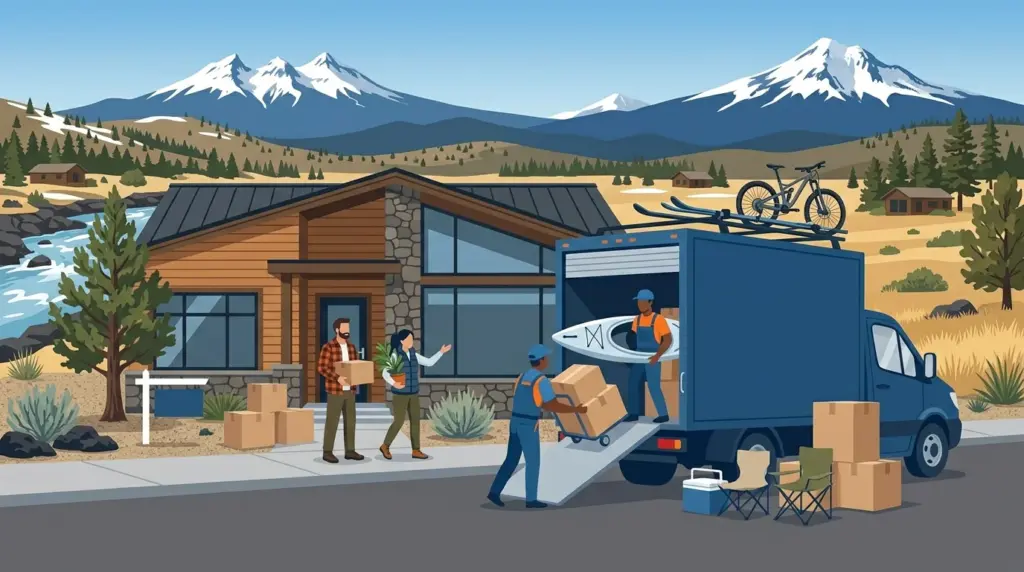
Decide what Bend needs to make possible
Bend can be an appealing base for outdoor access, a high-desert climate, a growing local economy, and a city scale that feels different from the Willamette Valley. The move works best when that appeal is connected to a durable housing budget and a realistic plan for work, services, winter travel, and the amount of driving the household accepts.
Compare addresses through a full year rather than an ideal summer weekend. Look at the home’s recurring cost, snow responsibility, smoke and wildfire information, the route to daily destinations, and whether the truck can legally reach and unload at the property. The strongest choice is the address that keeps those ordinary obligations manageable.
Match Bend’s appeal to the housing and access reality
Bend is not a generic Oregon alternative. Its 2025 population estimate was 107,342, while the April 2026 Zillow estimate of typical advertised monthly rent was about $2,237 and the ACS median owner-occupied home value was $718,400. The decision is usually about whether the household values Bend enough to absorb a relatively demanding housing budget and mountain-access constraints.
The housing figures are citywide reference points, not a promise about inventory. A household that needs a garage, pet acceptance, short commute, or immediate occupancy should price those filters directly. If the budget only works at the median, it does not yet account for the household’s actual constraints.
Compare Bend with the statewide moving guide, then put the chosen address into the ultimate moving checklist. The critical questions are housing fit, winter access, wildfire readiness, and whether the truck can legally and physically reach the curb.
The housing judgment
The ACS median gross rent was $1,883 for 2020–2024 and ZORI was about $2,237 in April 2026. They use different definitions and periods, so the responsible inference is not a percentage increase. Both point in the same planning direction: verify current inventory and leave room for deposits, utilities, parking, and overlap.
The ACS showed 38.5% of rent-paying units spending at least 35% of household income on gross rent. That is not a statement about every renter, but it is enough to reject a breezy “high income solves it” narrative. Test the household’s own after-tax cash flow.
If the household is buying, compare the specific home’s price, insurance, maintenance, snow access, and wildfire preparation rather than using the citywide median as a negotiating anchor. A median describes the distribution; it does not value one property.
The Cascades make origins matter
From Portland or the Willamette Valley, the move crosses a mountain corridor whose conditions can matter more than the straight-line distance. From Seattle, the route adds a longer interstate approach before the Cascades. From California, the trip is long but may avoid the same west-to-east pass pattern depending on the origin.
Ask the provider which route, weather policy, equipment, and delivery spread it is quoting. Do not demand a fixed road choice weeks in advance; demand a clear decision owner and communication rule when conditions change.
Winter streets and the final 200 feet
Bend identifies emergency snow zones where parked cars may need to be cleared during declared snow emergencies. The city also notes that serviced roads can still have snow or ice and that private streets, alleys, and private complexes are not city-maintained. A plowed arterial does not prove the driveway or apartment approach is ready.
Downtown time limits and loading restrictions are address-specific. Reserve an appropriate space or private loading area rather than cycling a truck through short-term parking. Send photos of grade, turn radius, overhead clearance, and the path from curb to door.
A Bend-specific move sequence
Separate route readiness from property readiness. Check the highway and weather close to departure, but confirm the property’s snow removal, wildfire evacuation information, parking, and key handoff much earlier.
Use how to choose a moving company to identify who monitors conditions, who can delay, where the shipment waits, and how a changed delivery window is priced. The cheapest estimate is not the lowest-risk plan if those answers are missing.
Questions that sharpen a Bend move
Sources
- City of Bend: Parking
- City of Bend: Winter Road Maintenance
- U.S. Census Bureau: 2024 ACS 5-Year Data
- U.S. Census Bureau: Vintage 2025 City and Town Population Estimates
- FMCSA: Estimating Charges
- FMCSA: Moving Checklist
- Zillow Research: Housing Data and ZORI methodology
- U.S. Census Bureau: Gross rent definition