

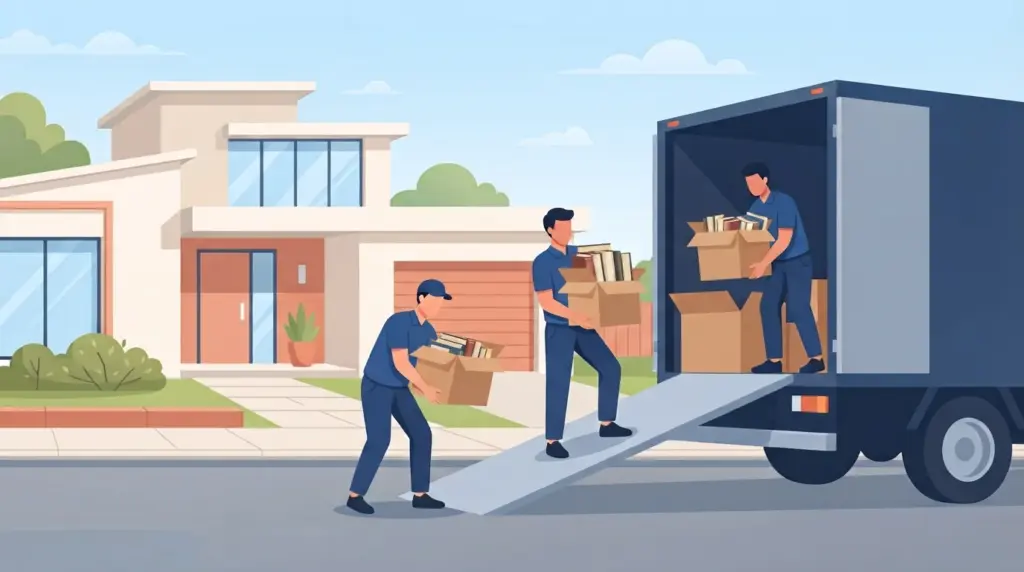
Books are difficult to move because a carton becomes dangerously heavy before it looks full, while poor support can bend covers, boards, pages, and bindings. Use strong, clean, dry small boxes and keep each finished carton around 30 pounds when practical, or below the lower limit set by your mover or the person carrying it.
This guide gives ordinary books and valuable volumes different levels of care. You will sort shelf by shelf, choose an upright or flat position that supports each book, fill gaps without crushing, protect against moisture, label the shelf order, and load the cartons where their weight and condition remain controlled.
Sort the collection before opening boxes
Separate books into four groups: moving to the new shelves, carrying personally, donating or selling, and recycling where accepted. Pull out library books, borrowed books, school materials, current records, and anything needed before delivery.
Identify rare, signed, fragile, valuable, oversize, leather-bound, photo, comic, and family volumes. These may need acid-free materials, individual enclosures, climate-conscious transport, an inventory, or a conservator rather than an ordinary moving carton.
Choose a small box and verify its strength
Use clean, dry corrugated cartons with intact flaps and no odor, moisture staining, crushing, or torn handle openings. A small book box is usually easier to keep within the weight target than a medium or large household box.
Close the bottom according to the box maker’s instructions and reinforce the seam with quality packing tape. Do not use a damaged grocery box merely because it is small. Place the empty box on a scale, add books, and stop before the complete carton becomes difficult for the actual carrier.
Match the packing position to the book
Do not rest a book on its spine or front edge. Stand an upright book on its bottom edge as it would sit on a shelf, or place it flat in a level stack. Do not force books into a tight gap, pack them at sharp angles, or leave them leaning without support. Keep covers closed and align the stacks so pressure falls evenly.
Use clean paper to stop movement
Line the carton when the box surface is rough or the books need separation. Use clean packing paper for ordinary books and acid-free paper for material that requires archival contact. Avoid newspaper ink against covers and avoid materials with fragrance, residue, or trapped moisture.
Fill side and top gaps lightly so books cannot slide, but do not compress the bindings. The finished top should be level enough for the flaps to close normally without pushing down on the books.
Weigh every finished carton
Use a household or luggage scale when available. If a box approaches the agreed limit, replace one or two heavy books with light paper fill rather than asking the bottom seam and carrier to absorb the extra weight.
Test the first carton on the actual route before packing the whole collection. A box that feels manageable beside the shelf may be too heavy for several flights of stairs, a long hallway, or repeated lifting into a vehicle.
Give valuable books a separate plan
Create a short inventory with title, edition, condition, photographs, and value documentation when appropriate. Ask the mover how high-value articles must be declared and what protection applies. Ordinary carrier valuation may not match a collectible book’s replacement value.
Keep irreplaceable documents, albums, manuscripts, and a small number of especially valuable books with you when practical. For a large or delicate collection, consult a book conservator, special-collections packer, or fine-art mover.
Seal and label for useful handling
Close the flaps without overfilling and tape the top seam. Label the destination room, general subject, box number, and “Books—Heavy” even when the carton meets the weight target. Do not list rare titles or values on the outside.
Keep an inventory count and label the boxes in the order you want them opened. Mark one carton for immediate work, school, or children’s books if those should be available before the rest of the shelves are assembled.
Load and store books in a dry, supported place
Keep book cartons upright, dry, and off wet ground. Do not stack heavy furniture or an unstable tower of cartons on them. In storage, use pallets or shelving approved by the facility and leave air space from exterior walls where moisture may collect.
Unpack promptly if a carton becomes wet, crushed, or unusually warm. If books are damp, musty, moldy, or affected by pests, isolate them from the rest of the collection and seek appropriate preservation advice.
Book-packing checklist
- Borrowed, donated, valuable, and everyday books separated
- Small clean cartons inspected and taped
- About 30 pounds or the mover’s lower limit observed
- Hardcovers supported and oversize books packed flat
- No books placed spine-up or forced into gaps
- Clean paper fills movement without crushing
- Valuable volumes inventoried and protected separately
- Boxes labeled by room, subject, number, and weight
Count book cartons and paper with Moveline’s moving-supplies checklist. If books are one room in a larger packing project, the EasyPack room workflow helps finish sorting before valuable volumes disappear into ordinary boxes.